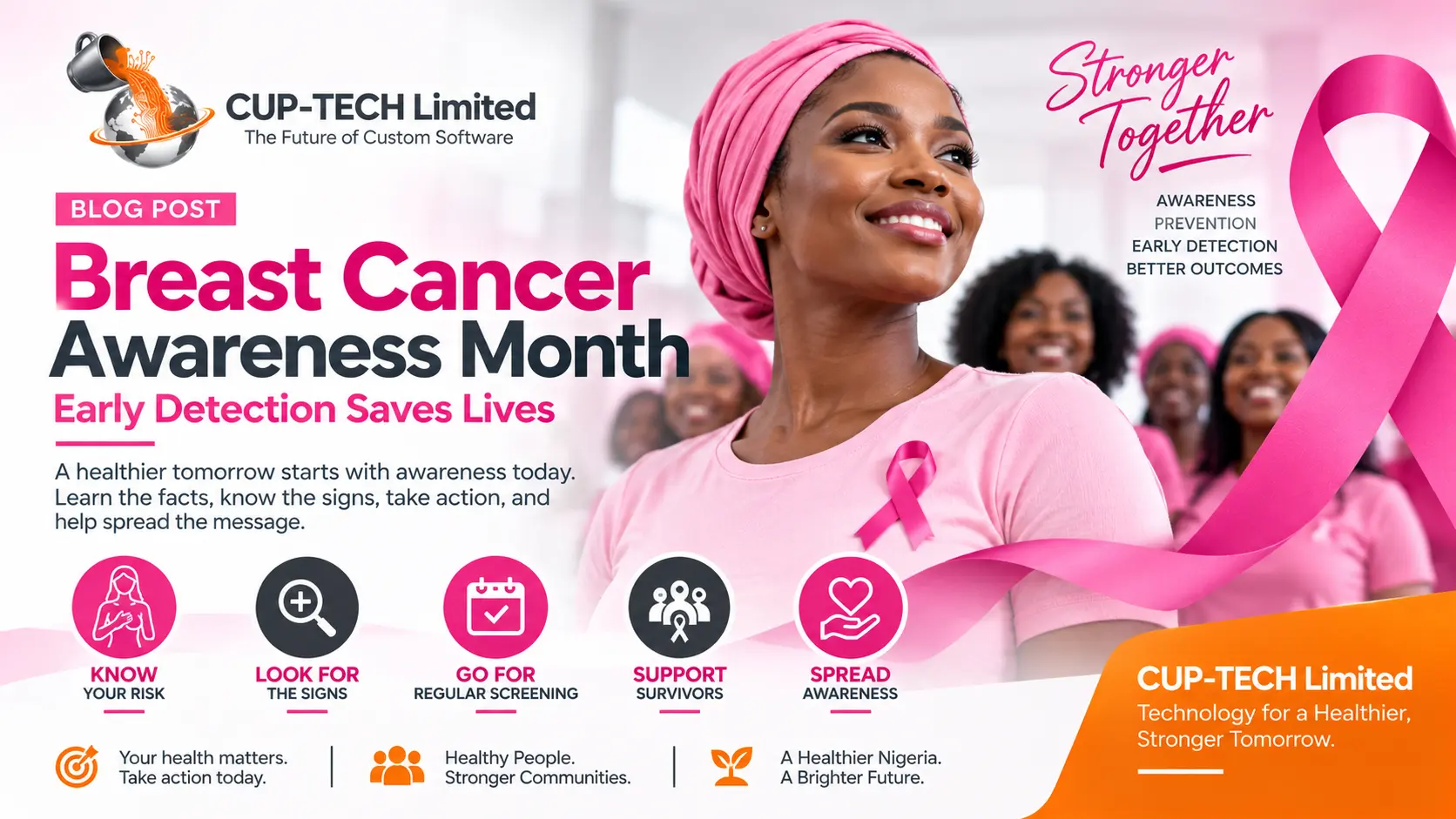
Every October, Breast Cancer Awareness Month provides an opportunity to raise awareness, encourage early medical assessment, support those affected by breast cancer and remind communities that access to accurate information can make a meaningful difference.
Behind every diagnosis is a person, a family and a community. Breast cancer awareness is therefore about more than wearing a pink ribbon. It is about recognising possible warning signs, seeking medical attention without unnecessary delay, supporting patients and survivors, and helping people make informed decisions about their health.
At CUP-TECH Limited, we believe that meaningful progress begins with awareness, access to information and solutions that improve people's lives. This October, we join the global breast cancer awareness movement by encouraging everyone to learn the facts, share reliable information and take proactive steps towards better health.
What Is Breast Cancer?
Breast cancer occurs when abnormal cells in the breast grow uncontrollably and form a tumour. It primarily affects women, but men can also develop the disease.
According to the World Health Organisation (WHO), approximately 2.4 million women were diagnosed with breast cancer worldwide in 2024. The disease remains a major global health concern, making awareness, timely diagnosis and access to appropriate treatment essential. WHO Breast Cancer Fact Sheet.
Although a breast cancer diagnosis can be frightening, early diagnosis and appropriate treatment can improve outcomes. Understanding the disease is an important step towards recognising concerns early and seeking professional guidance.
Know the Warning Signs
Breast cancer does not present in the same way in everyone. Some people notice a physical change, while others may have no obvious symptoms in the early stages.
Possible warning signs include:
- A new lump or thickening in the breast or underarm.
- A change in the size, shape or appearance of the breast.
- Dimpling, puckering or other unusual changes in the breast skin.
- A newly inverted nipple or changes in the nipple area.
- Unusual nipple discharge, particularly discharge containing blood.
- Persistent or unexplained changes in the breast or nipple.
These changes do not automatically mean that someone has breast cancer. Many breast lumps and other changes have non-cancerous causes. However, any new or unusual change should be assessed by a qualified healthcare professional rather than ignored or self-diagnosed. Source: WHO.
Why Early Detection Matters
Early detection is an important part of improving breast cancer outcomes. When breast cancer is identified before it has advanced, treatment is generally more effective and the chances of successful management can improve.
There are two important aspects of early detection.
Recognising symptoms early: Understanding what is normal for your body can help you notice changes and seek medical advice promptly.
Appropriate screening: Screening can identify certain breast cancers before symptoms develop. The most suitable screening approach and timing depend on factors such as age, personal risk and available clinical guidance. Speak with a healthcare professional about the screening options appropriate for you.
It is important to remember that checking your breasts or attending screening does not replace professional assessment when symptoms are present. If you notice a concerning change, seek medical advice even if you recently had a screening examination.
Who Is at Risk?
Breast cancer can affect people with different backgrounds and lifestyles. Increasing age, certain inherited genetic changes, a family history of breast cancer, previous radiation exposure and some hormonal and reproductive factors can influence risk.
However, having no known family history does not mean that a person cannot develop breast cancer. Many people diagnosed with the disease have no known family history or clearly identifiable risk factor.
Rather than relying on assumptions, understand your personal and family medical history and discuss any concerns with a qualified healthcare professional. They can help assess your risk and advise on appropriate screening or further evaluation.
Supporting Patients, Survivors and Their Families
A breast cancer diagnosis can affect physical health, emotional wellbeing, finances, relationships and family life. Patients may experience fear, uncertainty and anxiety as they navigate investigations, treatment and recovery.
Support can take many forms:
- Listening without judgement and respecting the person's wishes.
- Accompanying them to appointments when invited.
- Helping with daily responsibilities during treatment and recovery.
- Encouraging them to follow their healthcare team's treatment plan.
- Sharing reliable information rather than unverified remedies or claims.
- Respecting their privacy and allowing them to decide what they wish to share publicly.
Breast cancer awareness should also challenge stigma and harmful misconceptions. No one should be blamed for developing cancer, and patients deserve compassion, dignity and access to appropriate care.
Survivors also deserve recognition for their experiences, while those currently undergoing treatment need sustained support beyond awareness campaigns in October.
The Role of Technology in Health Awareness
Reliable information can help people make informed decisions, recognise concerns and understand where to seek assistance. Technology provides practical ways to make health information more accessible.
At CUP-TECH Limited, we recognise the potential of responsible digital solutions to support healthcare communication and service delivery.
Digital awareness campaigns: Websites, social media platforms and mobile-friendly educational resources can help distribute accurate health information to wider audiences.
Accessible health information: Well-designed digital platforms can make educational content easier to find, read and share, including on smartphones.
Healthcare administration and patient navigation: Appropriate digital systems can help healthcare organisations manage appointments, coordinate referrals and organise patient communication, supporting a smoother care journey.
Secure information management: Healthcare technology must protect sensitive patient information through appropriate access controls, security measures and responsible data handling.
Technology does not replace clinical judgement, diagnostic tests or medical treatment. Its value lies in supporting healthcare professionals and helping people access trustworthy information and services more effectively.
How You Can Make a Difference This October
You do not need to be a healthcare professional to contribute to breast cancer awareness.
You can make a difference by learning the warning signs, encouraging loved ones to seek medical advice when needed, sharing verified information, supporting affected families and helping reduce the stigma associated with cancer.
If you are organising an awareness campaign at your workplace, school, community or organisation, consider hosting an educational session with a qualified healthcare professional. Where possible, signpost participants to appropriate local screening and diagnostic services.
Most importantly, let awareness lead to informed action, not fear.
CUP-TECH Limited: Technology with Purpose
At CUP-TECH Limited, we are committed to developing practical digital solutions that help people and organisations address real-world challenges. We recognise that innovation matters most when it contributes to meaningful outcomes.
During Breast Cancer Awareness Month, we encourage individuals, families, businesses and healthcare organisations to support the spread of reliable health information and promote a culture of early action, compassion and informed decision-making.
A healthier community begins with people who are informed, supported and empowered to act.
Conclusion: Awareness Today, Hope for Tomorrow
Breast Cancer Awareness Month reminds us that knowledge, timely medical assessment, appropriate screening and compassionate support all have an important place in the fight against breast cancer.
Know the signs. Understand your risk. Seek professional advice when something changes. Support those affected and share information responsibly.
Together, we can help build communities where breast health is discussed openly, concerns are addressed promptly, and people feel supported throughout their healthcare journey.
Early detection matters. Awareness empowers. Support makes a difference.
CUP-TECH Limited: The Future of Custom Software. Technology for a healthier, stronger tomorrow.
🌐 Website: https://www.cuptechltd.com
📧 Email: hello@cuptechltd.com
📞 Phone: 08055775441
Disclaimer: This article is intended for general health education and awareness. It does not replace professional medical advice, diagnosis or treatment. Consult a qualified healthcare professional regarding symptoms, personal risk and appropriate screening.